Studying Abroad at Marist

If you had the chance to move across the globe, and live in another country for four months, would you do it?

This past January I returned home from Marists study abroad program in Florence, Italy. I spent a semester thousands and thousands of miles away from my hometown in New Jersey.

Studying abroad was an adventure I had always thought about embarking on during my college career. Even though this seemed very exciting, I did have hesitations and worries about moving so far away from home at age 20.

Junior, Meredith Shaffer also decided to study abroad last semester in Florence. She says, “I was super homesick the first few weeks in Italy. I missed my friends and family so much, but I knew it was going to get better. I was worried about not finding comfort in being so far away, but eventually I did.”


Photo Via Meredith Schaffer

I can imagine that students, including myself, in the same position felt the exact same way as Shaffer did. I personally did not want to let my worries get in the way of this opportunity. I knew that the experience would help me grow as a person and allow me to experience things that I could never experience on a college campus.

Studying abroad in Europe allowed me to experience the world as my own classroom. Rather than learning from books or browsing the Internet, I had the ability to navigate a completely new way of living. I was exposed to new history, culture, and a landscape that eventually taught me more than I could ever imagine.

Though moving across the world for months at a time can seem scary to some, it was comforting for me to know other students in the Marist study abroad program. I fortunately knew a few familiar faces that were going to be living in Florence as well, but I desired to put myself out there and meet new people.

Throughout my abroad journey I realized how difficult it can be to meet new people and make new friends, especially when you’re not in your comfort zone. “I decided to room with people that I didn’t know previously,” Sophomore Gia Pares stated. She continued, “I was always eager to meet new people at Marist, but I was also excited to develop relationships with individuals from other parts of the world.”

Communicating with new people from around the world on a daily basis encouraged me to become more confident. I tested language barriers and threw myself into seemingly uncomfortable situations where I did not know my surroundings. I grew as a person because of the places and people I encountered.

“I loved meeting new people abroad, but also traveling to new places. I would say that traveling was my favorite part about being in Florence. It was easy to do and I will never forget the beauty of the places that me and my friends went to,” said Shaffer.

I also found happiness in traveling to other destinations around Europe. I traveled to France, Croatia, Barcelona, Brussels, Munich, and so many more unbelievable places.

“You forget about the fact that you’re still in school,” said Pares, “We found the time to travel when we got all of our work done.”
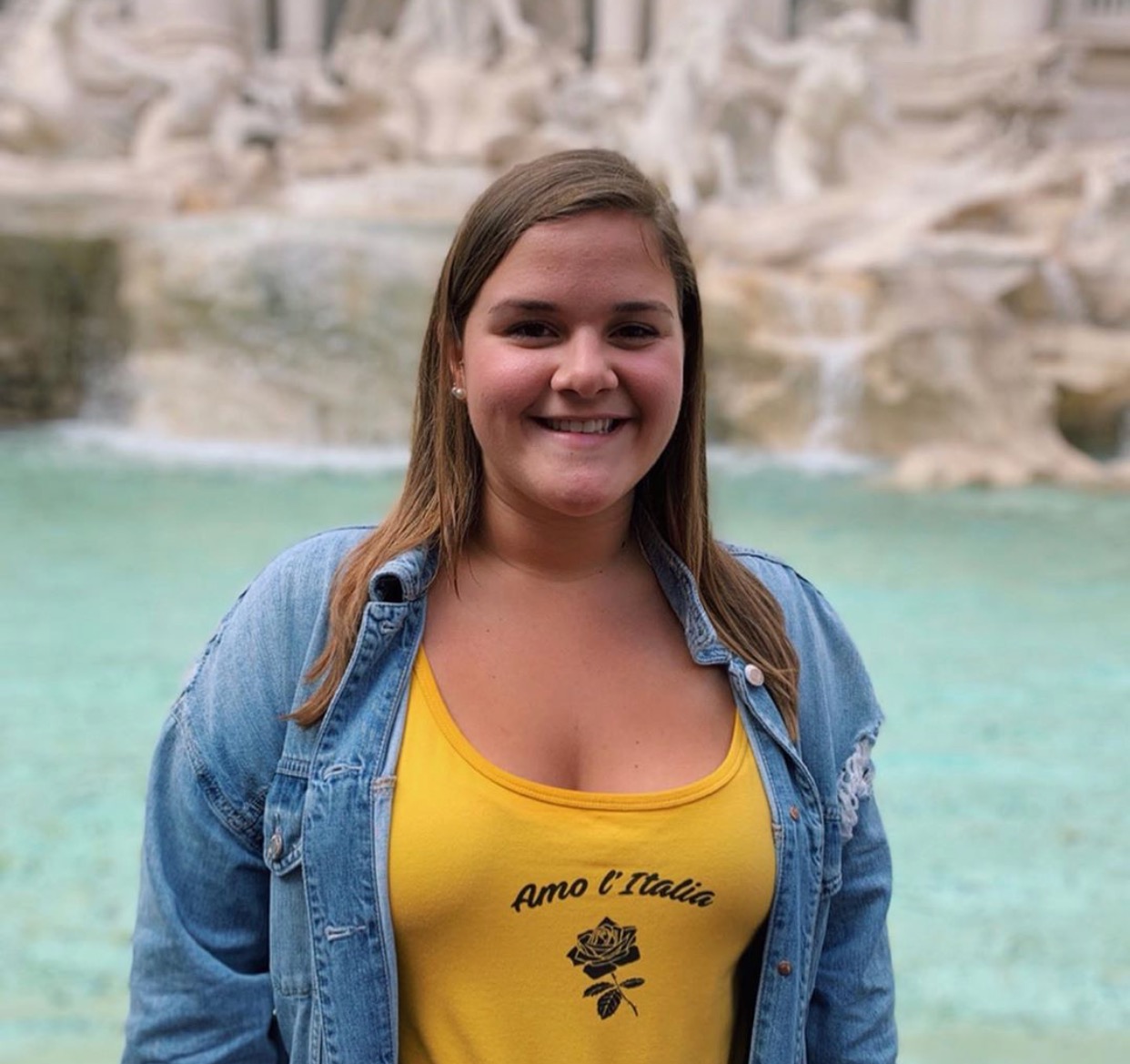
Photo Via Gia Pares

It was sometimes challenging to balance school and life during my time in Italy. There were so many amazing places to travel to, museums to visit, restaurants to eat at, and people to meet.

Focusing on schoolwork was an extremely large priority of mine. Therefore, in order to establish a sense of balance I really had to manage my time well. Most of the traveling that we did was during the weekend, but this was more than enough time to get to see all of these incredible places.

Visiting new countries every other weekend allowed students to get a glimpse of the world. Though we could not spend weeks at a time in these various locations, we were still able to grasp the beauty of each individual place.

“I feel like study abroad and traveling on the weekends was a great preview to the rest of the world. I know know of the places I have to go back and visit later in life,” said Shaffer. She went on to say, “There are also little things about Florence I already miss, like living in my apartment, going to the coffee shop on my street, and talking to familiar workers in local shops.”

There are so many moments about studying abroad that I personally miss every single day. I developed a consistent routine throughout my weeks spent in Florence.

Each morning I would walk to a café 3 blocks over to get a cappuccino and croissant. I would see the same faces each morning and develop friendships with the staff.

I would go to class Monday through Thursday and mingle with students from other schools across the United States. I would also spend 6 hours every single Tuesday in a painting studio, learning how to improve my skills from an incredible Italian sculptor and artist.

“Me and my friends would a visit the same restaurants, because the food was so delicious- we couldn’t stay away. And we had our favorite bars and clubs we would do dance at,” added Pares.

Similar to student Gia Pares, I consistently returned to my favorite spots around Florence, and hope to one day return to revisit them.

It is completely unreal to think about the fact that I was able to live a whole other life then I am living right now. All in the short time span of four months I learned about new cultures, foods, art, and most importantly I learned a lot about myself.

I lived a great life in Italy, and conquered the fears I had upon my arrival. Throughout my time there I was able to develop a routine that I was so afraid of not having. All of my worries and doubts about living so far away from home disappeared the second I got comfortable living in Europe.

I will never forget the people I met and the places I experienced. I encourage every single student at Marist College to study abroad if they can. Just because something may seem scary or uncomfortable does not mean we shouldn’t give it a try.

By stepping outside of my comfort zone and going for something I wanted I was able to create memories that will last a lifetime.

“Studying abroad was a great opportunity to discover myself while also gaining a wider understanding of the world we live in,” exclaimed Shaffer.

Monster: The Zodiac Killer

Monster released a series of podcast episodes surrounding the disturbing story of the Zodiac Killer. The first episode within the playlist outlines the original murder, and talked to those close to the case.

In 1968, during christmas time in California, two bodies of teenagers were found after both had been shot.

The podcast initially follows a man named Tom Balmer, a photographer on the scene of the original crime. 

“The night of December 20 was an interesting one,” Balmer said, “Photographers back then were ambiance chasers – we had radios with the local police frequencies so we were able to follow what was going on.”

Balmer remembers hearing the dispatch and instantly visited the scene.

“A reporters job in this instance is to start recording and photographing, not experiencing. If you were to get emotional in situations like these, it is impossible to do work,” Balmer explains.

He described the instance where he snapped a photo of investigators peeling back the blanket and looking at the body, which was then published in newspaper the next day. The podcast discussed investigative journalism culture and then transitioned into discussing societal culture.

The hippy counter culture during this time in California, specifically San Fransisco, is very complex. The artistic and exploratory culture that emerged gained national publicity. 

The area then became uneasy. Political imbalance, violence, and drug abuse were extremely common in the 60’s. This is a segway into the time period where the Zodiac Killer begins his destruction.

The killer was stalking victims, taunting police, kept bloody momentums from his slayings, and boasted about his deeds to the media.

The podcast then introduces a woman named Lorraine, who was friends with one of the deceased victims. “I remember leaving school that day and saying bye to her, that would be the last time I ever saw my friend,” said Lorraine.

There was reports of no animosity, rape, theft, or motive to the murders. This made it impossible to move forward with the case, and it was left for months with no progress in solving it.

Serial killers during this time in history were not a national phenomenon like they are today.

The true story of the Zodiac is often blurred and the podcast aims to resolve popular misconceptions. The Zodiac Killer is a unsettling mystery.

The podcast concludes with the introduction of the next strike by the Zodiac.

The sound effects within this particular podcast were very similar to the piece we listened to in class. It began with haunting music layered on top of children singing a christmas carol. Immediately, the tone of the podcast is eerie and the scene is set. 

Following the opening effects, the creator of the podcast strategically included various sounds to enhance the content. The sounds of engines, gun shots, sirens, and scary music coincided nicely with the story that was being told.

Every effect that was added to the podcast was strategic and made sense with the story. I also noticed that the speakers and narrator were very clear and concise in what they were saying.

Audio worked well in this case because listeners cannot see things like police tapes, private interviews, etc. The phone calls and tapes that were included in the podcast are pieces of the story that are purely audial. The medium of podcast for this story makes sense.

Ibram X. Kendi On Racist America

Founding Director of the Antiracist Research and Policy Center at American University, Ibram X. Kendi, spoke at Marist College last Wednesday.

Wendi arrived at Marist on Wednesday. His talk began around 7pm and was held in the Murray Student Center. The theatre was filled and the spirit of the room was engaging.

Kendi is a Professor of History and International Relations at American University and is an accomplished winner of the National Book Award for Nonfiction.

Kendi won this award with his book “From the Beginning: The Definitive History Of Racist Ideas In America” (Nation Books, 2016). His work revolves around the ideas of racism and antiracism in American history.

There is a particular pre-organized form of racism that we have consistently been taught to believe. These messages are passed along from generation to generation.

“All racial ideas, all policies, and all people are either being racist or anti racist,” said Kendi. This statement would set the tone of the evening.

Marist College students, faculty, and community members had the privilege of hearing him speak in regards to his famed books. His work reflects his personal belief and experience with racism and antiracism in society.

Student Sabell Strachan introduced Kendi to the full theatre, recognizing these impressive victories and preparing the audience for his speech.

“I was really excited to see such a powerful individual come to Marist and be able to share his amazing work with our community,” said Sabell. She later added, “It is extremely important to understand the work that Ibram has done. When our society is aware of deep rooted racist issues we can then turn it around and create a better world.”

Ibram X. Kendi began his talk by briefly discussing his early life. Kendi had a lot of experience in the journalism world, through school and work. He then went on to pursue a degree at FSU.

Kendi told a story from his time as a student at FSU to set the pace for his talk. When Ibram went to school at Florida State University, he decided to take a test prep course. This course was sought out in hopes of him achieving a higher score on his GRE test.

Kendi had an initial assumption of this class, and it was that the course would increase his test scores for the GRE and make him an overall stronger student. Kendi then explained that while taking this course, he was disappointed with what he was “learning.” He described the unfortunate circumstance that his teacher was not aiding him in becoming a stronger student, but teaching him to conform.

Photo via Marist College NG Theatre

Kendi was instructed to follow a specific form, a structured set of guidelines and beliefs, not new content. He did not learn any new skill or knowledge, just simply how to take the GRE successfully. This story he shared with the audience correlates to the concept of racism throughout American history.

Society has been taught a particular form of racism. For instance, racists believe that black people are more violent or even more likely to be criminals. But Kendi points out that there is a huge difference between poverty and violent crime versus race and violent crime.

Kendi explains that we have been taught that black people are an issue, while the real problem stems from environment and circumstance.

These people that share this belief are racist, and in our societies history, rascits have been in denial. Kendi says, “Any idea that suggests a racial group is inferior or superior to any other group is racist.”

“We have been taught to put different groups on a hierarchy,” adds Kendi. He stressed the idea that a lot of individuals who believe they are antiracist are actually the opposite, and they are not aware. Because of the idea that we have been taught this form, people are blind to the reality of racism issues in America.

Antiracists believe that every racially diverse group is completely equal in every sense. And according to Kendi, if you’re unsure if you are a racist or not, you probably are a racist.

The audience was fully captivated by the information Kendi was sharing with them. Student Sabell believes, “Ibram makes a great point when he discusses the fact that so many people will simply state that they are not a racist, but their actions and behavior do not support it. People pass harmful judgement on various racial groups without realizing what they are saying is considered extremely racist.”

Genetically speaking, race does not exist. So it is unfair to pose judgement on a particular race or believe that one group of people is superior in any way.

Kendi says the, “function of racist ideas is to get us to do nothing.” If society continues to follow the form that history has taught us, we will not grow any stronger. Preconceived judgement of race is unprogressive.

Just like when Kendi enrolled in his test prep course at Florida State University, he did not transform into becoming a better student, he conformed to a set structure of how to take the test. The ideas of racism throughout history can be viewed in this same way.

Passing along racist ideas to new generations will not make us a stronger society. Kendi said, “In doing nothing, we are reproducing racial inequities.”

If we choose to conform to these absurd racist concepts we are not improving societal beliefs. Thus, Kendi wants us all to become antiracist. If we take a stand against power and policy that revolves around racism we can improve our nation.

Policy and power are the problem. Our racist ideas are rooted in our nations powerful roles. At the end of his speech, Kendi said, “We should not be trying to change civilized people, but try to change power and policy.”

Power in politics is a huge issue that we witness day to day. When power and policy threaten racist ideas, society is faced with the need to rise above this indifference.

Our nation has been taught a form, but we need to grow stronger and move forward. Society must think beyond organized ideas of history.

The Value Of A College Education

In 2016 Marist Poll questioned if the cost of an education is really worth it.

A majority of Americans believe that the price tag that comes along with a college degree is definitely worth it. The Marist Poll reported that these individuals also agree that a college education is important for future earnings and personal growth.

Though these people believe a college education is worth the money, 3/4 of them consider the cost of school to be out of reach for most American families.

Here is the data I reviewed…

Marist Poll reports, “55% of Americans, including 51% of parents, think college is worth the cost, and more than three in four Americans consider college education to be essential.  In fact, 77% of residents perceive a college degree to be key to future success, and the same proportion thinks the need for a college degree equals the importance of a high school diploma for an earlier generation.”

Chart via Marist Poll

It is clear to see that most Americans believe the price that comes along with a college education is worth it in terms of maintaining future successes.

Over 60% of people with a four year degree also agreed that the costs of education are worth the money. And those without a degree were slightly less likely to agree.

More data showed that “Those with a degree, 88%, as well as those who earn $50,000 or more annually, 81%, are also more likely than those without a degree, 70%, or those who earn less than $50,000, 73%, to consider a college education to be key to future success.”

Graduates who have already paid their debts and scored well-paying jobs proved to be more likely to support the value of college.

A piece of data that stuck out to me was this: “Women, 61%, are more likely than men, 49%, to say college is worth the price tag.”

This statistic caught my eye based on the premise that women have had a hard time obtaining high standing professional roles.

Throughout American history there has always been a gender imbalance, especially in the workplace. The data recored by the Marist Poll coincides with this statement.

Women with a 4 year degree believe college is worth the money, because they used their degrees to score jobs.

Chart via Google Sheets, data from Marist Poll

College education allows individuals to obtain knowledge and skills needed for real world jobs. A college degree is helpful in aiding individuals to land a job opportunity.

Because women have always had a hard time obtaining rights in society, a college degree is extremely helpful in proving their power.

The fact that men less likely believe college is worth it is extremely interesting. Do men think the value of college is not valid because it has always been easier for the patriarchy to land high roles in the workplace?

I am left wondering the reason men believe college is not worth its value, and why women are more likely to support the large cost of a college education. Do women still have a harder time landing professional roles?

This one small statistic stuck out to me, as I would have thought the data would have been more even in this case.

The overall consensus within this Marist Poll survey is that a college education is worth the money. I get a feeling that most people support getting a college degree due to the success that comes with it.

Marist College’s Biggest Issue

When I asked junior psychology student Megan Knutson about what she believes the biggest problem at Marist is, she responded by saying, “people who stare.”

I was shocked and a little confused at her response, but it intrigued me to find out more. I asked Knutson how the issue personally related to her experience at Marist.

“Every day I walk through Lowell Thomas to get to Dyson for my classes, and I smile at people who I come in contact with. No matter where I am on campus I always notice people stare at me.”

Knutson proceeded to share that a lot of individuals on campus are not very friendly or inviting. Knutson added, “It has been very hard to meet new people at Marist and it doesn’t make it any easier when no one is being nice to one another.”

Knutson gets the impression that most of the people who stare at others are motivated by judgement and negativity. “I know a lot of people who complain about the same issues, and we really don’t know why people look at others like this.”

When this topic was presented to me I thought about my own experience with this issue at Marist. A few weeks ago in Lowell Thomas I was sitting in the lobby doing my work.

After a few moments I noticed that a boy sitting with a group adjacent to me was speaking obnoxiously loud. I took out my headphones to hear him say, “You can stop staring at me now.”

I was extremely uncomfortable and unsettled by this encounter. The boy was loudly telling another student across the lobby to stop staring at him. The boy proceeded to repeat the phrase as the other student continued to glance over at him.

I told Knutson about this encounter that I had and she was not surprised that this happened to me. She said, “Things like that always happen, and most of the time I want to look up at the person and ask them why they are looking at me.”

Photo by Sierra Lesiak on Marist College Campus

Knutson expressed that she never tries to be rude to anyone but it is bothersome when people continuously commit the act. “It is disheartening to see so many people coming across as judgmental and rude,” she shared.

After speaking with Knutson I returned home to ask my roommates about the issue. My housemate Caitlyn Mannino told me a story of when she came in contact another offender.

“I personally feel that the fashion department in particular is extremely judgmental. Every time I walk through the new Steel Plant building I find that fashion students stare at me,” said Mannino.

I continued to ask her why she feels students do this and she replied by saying, “I am not really sure, I think it all comes down to the types of people here. No one is very friendly or open to meeting new people once they have an established group of friends.”

I got a sense that a lot more people than I originally thought on campus feel the same way, especially after talking with my roommates. Positive energy is clearly lacking on the Marist College Campus.

Mannino also shared that she “wants people to be more open to talking to new people and not let judgement stop them in meeting other students.”

I asked Mannino on what she believes students at Marist are judged on, and what other reasons could allude to the staring sessions. She answered by saying, “I think people think they can look at others, in negative ways, when they have a different style.”

“Especially since I have my art classes in the new Steel Plant building I always feel an overwhelming sense of judgement when I walk through.” I agree with this statement Mannino shared because I too get the same feeling.

Just because I am dressed in sweatpants, or even a fur coat one day, does not give anyone the opportunity to judge. Whether the staring students are doing this act on purpose or not, many notice this issue.

I believe that this all comes down to the fact that many individuals on Marist College campus are not open to meeting new people. Students with closed minds are giving off negative energy to their peers.

Fortunately I personally have found that Freshman students are the friendlier bunch. These students are increasingly excited an open to talking with people they do not know.

Students at Marist College need to branch out and make friends. Instead of judging others that you do not know by angrily staring at them, offering a smile to them is much nicer.

Knutson believes, “If everyone was nicer to one another on and off campus we would all have a much better time together. College is all about meeting new people, and most Marist students need to welcome this idea.”

Instead of taking that extra long glance at someone on campus, say hello or give them a smile.

Is Sarah Isgur Unfit For Her New Role With CNN?

Over the past week there has been a lot of confusion over CNN hiring Sarah Isgur. Isgur served as the Justice Departments leading spokeswoman under Jeff Sessions, and is now joining the CNN network as a political editor.

Isgur plans to coordinate political coverage for the 2020 campaign. When the news broke, many were left confused and angered due to her poor work history.

Isgur served as campaign manager for Carly Fiorina’s unsuccessful presidential campaign. Isgur also served as the director of public affairs at the Justice Department in the Trump administration. As she has been affiliated with highly controversial president, Donald Trump, her inclusion in the CNN workplace has sparked conversation.

A lot of people also believe that CNN is hiring a woman with virtually no journalism experience. The public is in disbelief and angered by the former Trump official and argue that she is unqualified for this new position.

There has also been a plethora of angry tweets and disturbed Twitter battles circling social media. Media outlets and irritated journalists are speaking out on the recent revelation.

Journalists are critical of Isgur due to the fact that she has had no prior experience in the journalism world. Isgur has been relentlessly called out for her lack of knowledge in this department.

Washington Post released an article explaining how “CNN itself hired Laura Jarrett in 2016 to cover the Justice Department; she had no journalism experience but had worked as a litigator — a job that entails seeking out facts and putting them on paper in clear and compelling ways.”

These unconventional hires are supposedly enabling news platforms in avoiding stacking ranks with those that share similar sensibilities and formulas. Washington Post says, “You can have only so many crusaders for nut graphs under one roof.”

CNN reportedly believes that hiring a conservative will add to viewpoint diversity in their company. Although diving into Isgurs past presence on social media, and after reviewing her past statements about CNN, we are still confused.

She once criticized CNN in a tweet, ‘Seriously? More balanced reporting today from CNN: chiron reads “anti-gay, anti-abortion group hosts value voters summit.”’ Isgur believed that the CNN network has shown explicit bias towards the left.


Photo via Twitter.com

Conservatives believe CNN’s audience is most likely mad due to her connection to the Trump administration. They argue the fact that no one was complaining when CNN hired Democrats or even when they hired a former Obama staff member to be a anchor.

Both the left and the right have vocalized their views on the subject. Conservatives are convinced that the statements lefts are expressing allude to a partisan attack.

So why would CNN hire a woman stirring this much controversy? It is believed that her position has been exaggerated. She will be coordinating coverage across TV and Digital, working with a team of editors.

CNN has put out a statement, in a video interview, regarding how it is not uncommon for those working in politics to transition into journalism.

I believe that most of the fallout in this situation stems from the fact that Isgur was once a member of the Trump administration. It is clear that there was also a sense of internal confusion on what exactly her role would be in the company.

I think a lot of people are rightfully concerned with this situation. Backlash on her hire relies on the basis that most of the public are not right wing supporters. The worries that have been expressed are appropriate and important to address.

Isgur transitioning from a job in politics to journalism is concerning. Although I am intrigued in seeing how she will do in this new role. Giving this woman a chance despite her background is a positive move.

It has been made apparent that her work with CNN is not going to be to represent Trump, and a lot of people are still unclear on this. She will not be speaking of or producing content based on views in favor of Trump. Isgurs new position allows her to separate herself from politics and work collaboratively in a different field.

I believe that Isgur is qualified for this new position and her past experience in politics may even benefit her work. We will not know whether the decision to hire her is a good thing or not until we see what she does with CNN.

The sense of confusion is valid, although in a world consumed by social media, we often tend to become obsessive over exaggerated news. Isgur’s hire may be unsettling and bizarre to some, but we can not officially deem her as unqualified for this position until the future election.

Here is the CNN interview explaining the controversy with Isgur:

https://www.cnn.com/videos/media/2019/02/24/rs-cnns-hiring-of-ex-sessions-spokeswoman-stirs-controversy.cnn/video/playlists/business-reliable-sources/

Alien Abduction Therapy

People actually believe that they have been abducted by aliens. 

A video posted on Vice examines this bizarre but not impossible belief. The video specifically addresses alien abduction therapy, and how one woman deals with her odd job title. 

Laurie McDonald is a clinical hypnotherapist who specializes in alien abduction regression for contactees. 

McDonald describes herself as a experienced therapist who is well versed in knowledge surrounding UFO’s and extraterrestrial contact. 

Her patients are known as experiencers. These people are constantly challenged by their own realities, and struggle with the horrible memories of abduction.

These individuals, the experiencers, whole heartedly believe that they have been abducted by aliens before. They are said to deal with ptsd and disturbing thoughts following their contact with extraterrestrials. 

Photo by @miriamespacio via Unsplash.com

McDonald hopes to calm the anxieties of these individuals through her therapy. 

McDonald reported to having been abducted herself by aliens. She claimed to have psychically encountered aliens and was 100% awake the entire time. Her own alien encounter aids her in helping those that have shared similar experiences. 

Those who experience confusion of time, bruising, or change in sexual identity are what she describes as signs of abduction. 

McDonald would also share that many of her patients have had sexual relations with the aliens. 

She is aware that the general public is weary that contact with aliens is possible. Society most often does not support McDonalds strong views. 

She wishes that more people will begin to believe and support the idea that alien abduction is real. Although, I still have a feeling most individuals will think alien activity is incredibly insane. 

The video interview that vice published is insightful and well planned. The interview with Laurie McDonald was concise and the questions she was asked were straight to the point. 

Though the video contained no personal bias or negative commentary, I personally felt that the video made McDonald look crazy. 

Everything the woman said dug her deeper into her own grave. The topic itself is odd and her bizarre answers made no sense. 

This concept allows me to realize journalism is very unpredictable. Interviews can go in any direction, good or bad. 

I appreciate when popular news platforms put out seemingly bizarre articles. Vice has always been a source that has impressed me with the content that is produced. 

Interesting and unpopular topics can be great subjects of news. And creating content that stands out can only benefit the source. 

Alien abduction is a weird subject but also fun and psychologically interesting.

Here is the VICE video…

https://video.vice.com/en_us/video/et-alien-abduction-therapist-explains-extraterrestrial-encounters/5c4b821cbe407763407ce233?&ref=vice

MoMA Closing for Renovation

If you’re thinking of taking a trip to the MoMA this summer, don’t. The popular museum is closing for exciting new renovation.

It has been reported that the total costs of this construction is about 400 million dollars, and will take about four months to complete.

The goal of the renovation is to create more space for more art. An additional 40,000 square feet will allow unrecognized artists to showcase their amazing work.

The new works that will be featured range in mediums. paintings, sculpture, photography, performance, and more will be exhibited for the public to enjoy.

“A new generation of curators is discovering the richness of what is in our collection, and there is great work being made around the world that we need to pay attention to,” said Glenn D. Lowry, director of the museum. “It means that the usual gets supplanted now by the unexpected.”

These new exhibit additions to the MoMA are inspiring and expressive. It is apparent that the museum is shifting their showing of work in hopes of reaching wider audiences and allowing unknown artists to finally be featured.

The works that will be added to the museum represent different cultures around the world. These artists are Latin, Asian, African American, and also focus on works by more women.

Via Unsplash.com by @echaparro

The new and improved modern art collection emphasizes female artists while also acknowledging our multicultural society. The positive changes within the showing of work at the MoMA are progressive.

Collaboration with new artists allows the publics knowledge of modern creatives to expand. Not only will new artists be shown, but the classic works from Van Gogh and Picasso will still be available for viewing.

Not only will the museum have new and improved viewing space and artwork, but it will also be open longer hours throughout the day for the public.

The New York Times shared these renovation details to keep the pubic informed. Along with the New York Times, MoMA has put out a series of tweets to keep their museum goers up to date.

The various tweets and articles swept across the internet are effectively revealing. In order to stay current and establish a relationship with the public, it is important for MoMA to notify their audience regarding these big changes.

Exciting new spaces and culturally suggestive art are important additions for the MoMA to include in their museum. New York based news outlets and twitter accounts are great ways to stay connected.

Indigo Children

Gavin Haynes traveled from England to the United States in hopes of investigating the strange world of Indigo Children. 

Vice YouTube channel is full of insightful and interesting videos, and this one was particularly odd. The secret world of Indigo Children is made up of individuals who believe they were born with “indigo” auras, and the skills to possess supernatural abilities. 

These children believe they are often misdiagnosed with learning disabilities, ADD, or ADHD at young ages. Indigo Children contradict what health care professionals have diagnosed them with, and live on the idea that they are spiritually gifted. 

Haynes explores the concept of Indigo Children through one on one interactions with those who believe they were born special. 

Indigo Children are described as highly intuitive and psychic. They have the abilities to heal others emotionally, physically, and energetically. Most Indigo’s believe it is their duty to help others. 

Haynes spoke to a ADHD specialist, to uncover his view on the matter, and the health care specialist was not convinced.

The doctor suggested that conditions like ADD and ADHD are extremely diagnosable, contrary to what an Indigo would believe. 

The ADHD specialist shared that mistreated hyperactivity and lack of concentration could pose issues later in life. Those that ignore their disorder could be at risk.

Photo by @cinestock via Unsplash.com

Haynes then decided to speak to a girl who believes she herself is an Indigo Child. Serafina Leffeld is a teenager who prides herself on her creative spirit. 

Leffelds mother diagnosed her as Indigo when she was a young child. Her mother believes that her daughter sees the world in a different way than most and spiritually has a lot to offer to our world. 

Leffeld is gifted in the way that she can read the auras of her peers, aid others in healing, and exhibit spirituality through creative art pieces. But after talking to Serafina and her mother, Haynes was left underwhelmed. 

Haynes was not convinced that Indigo Children obtain godly powers or can spiritually transform the world. Haynes believes “Indigo Children” is a movement that people need in the way that it externalizes a higher power, and influences people to push their issues aside unconventionally. 

I decided to write about this topic, as I came across the Vice YouTube video about Indigo Children. The topic itself is extremely interesting and very controversial.

As an individual who is becoming more in tune with spirituality, I believe this topic is under recognized in the journalism world. The video was thoroughly executed and fascinating.

Who is to say that these children do or do not exist? To some, these children are perceived as astral beings sent to guide humanity to a higher place, and to others, they are simply hyper children with undiagnosed ADD. 

The debate whether a child is gifted or has a disorder arises in respect to the concept of Indigo Children. This controversial topic made for an engaging piece.

Gavin Haynes spoke to specialists as well as those who believe they are intrinsically gifted in hopes of discovering an answer. 

He approached the situation in an open minded manner, dedicated to learning more about the movement. He spoke to individuals who had concrete thoughts and valuable information.

Though Haynes left the United States unconvinced of the truth behind Indigo Children, he was able to delve further into the ongoing debate.

Haynes’ video journalism story captured the attention of skeptics and believers, ultimately creating an insightful piece for viewers to enjoy.

The original Vice video:

Via Vice YouTube Channel

A Hipster Gets A Haircut

Todd Fatjo got a haircut and reality settled in.

Michael Brick of the New York Times shares the story of Todd Fatjo, a hipster from Williamsburg who decided to move away from his beloved loft apartment.

Fatjo once resided in the hub of Williamsburg. He lived in a eclectic loft built for parties that was surrounded by the best of the best amenities for a hipster. Most of which included Dunkin Donuts, Chinese takeout, and 99 cents stores.

Fatjo told Brick about all of the amazing parties held in the spacious loft and the memories he would always think back on.

Photo provided by Unsplash.com via @thevanegmond

But when Fatjo decided it was time to move away and settle down with his girlfriend, he needed to find a new tenant for his beloved apartment.

Fatjo moving away signified that the hipster scene in Williamsburg was dying. He felt that at this time in his life it was his responsibility to face reality.

Fatjo got a new job in Manhattan, a haircut, and found a new place to live with his girlfriend. In the midst of putting his loft up for sale, he was disappointed when the young hip kids he aimed to sell his loft to did not show any interest.

The fate of the once awesome party loft could represent that the hip scene of Williamsburg is no longer. Fatjo remains hopeful that a new generation will invigorate the neighborhood again.

Michael Brick tells the story of Todd Fatjo in a light hearted and relatable manner. The hipster culture in Williamsburg may be dying, but the story of Fatjo’s party loft is one to share.

Brick tells the story that none of us want to hear, that at a certain point in our lives we have to face reality.

Behind the humor and silly nature of the New York Times story, readers can relate to the idea of getting their own reality check.

At some point in our lives we need to buckle down and move forward. Whether it be through getting a job or moving home locations, stepping away from a certain lifestyle may be necessary in the long run.

After reviewing Bricks article, I thought of it almost as a eulogy. A testament to a party loft, accounting the legacy that once was a hipsters dream home.

The nature in which Brick writes is extremely relative. The quotes from Todd Fatjo and the personal stories included in his piece give readers a feeling of comfort.

Brick told a seemingly simple story but was able to make it unbelievably interesting for his readers. I personally found myself feeling both happy and sometimes sad for Fatjo, captured by this bittersweet moment in his life.